Skip to product information

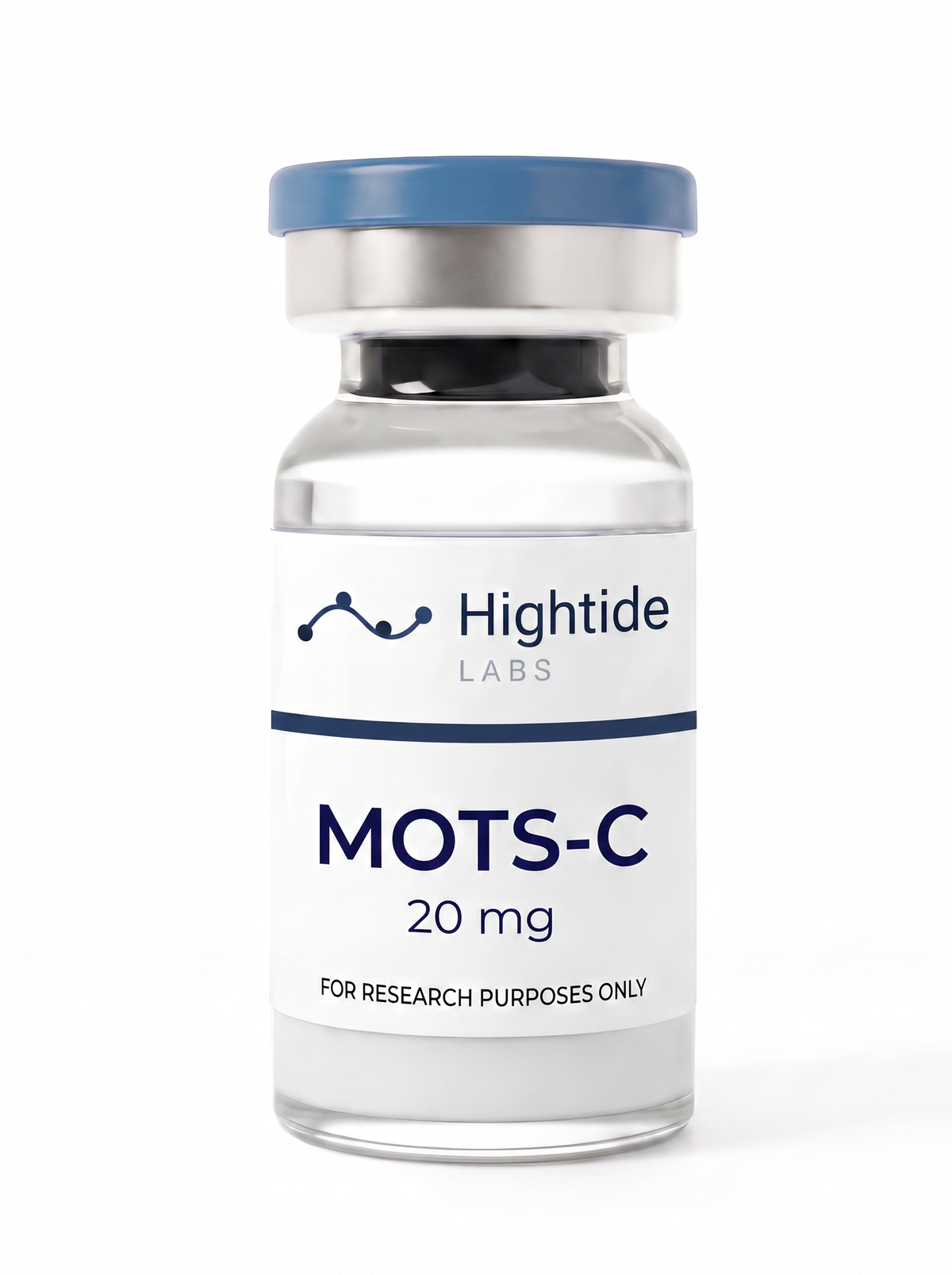
MOTS-C (20mg)

MOTS-C (20mg)

Regular price $74.99
Regular price $74.99 Sale price
SAVE Sold out

✔ Verified 99+% Purity

✔ Third-Party Approved & Tested

✔ Fast Australian Shipping

Research Use Only

This product is sold for research purposes only. It is not intended for human or animal consumption. By purchasing this product, you confirm that you are a qualified researcher or are purchasing for legitimate research purposes.

Bacteriostatic Water (20mg)
Add Bacteriostatic Water (20mg)
Required for reconstitution
$24.99
MOTS-C (20mg)

MOTS-C (20mg)

Regular price $74.99
Regular price $74.99 Sale price
SAVE Sold out

Shipping Information

Orders are processed and dispatched within 24 hours of payment confirmation (Monday–Friday). Delivery typically arrives within 1–4 business days via Standard post, and 1-2 business days via Express post.
View full details

MOTS-c

Supplied as a lyophilized (freeze-dried) white powder in a sealed sterile vial. Requires reconstitution with bacteriostatic water prior to use. Each vial contains 20mg of MOTS-c at ≥99% purity.

MOTS-c is a 16 amino acid mitochondrial-derived peptide (MDP) encoded within the 12S rRNA region of the mitochondrial genome — unusual among mammalian peptides, which are typically nuclear-encoded. First characterised in 2015 by researchers at the University of Southern California, MOTS-c has since become a central focus of metabolic and longevity research. It has been extensively researched for its role in AMPK pathway activation, insulin sensitivity, glucose metabolism, exercise adaptation, and cellular resistance to metabolic stress.

Research Background

Unlike nuclear-encoded peptides, MOTS-c is expressed directly from mitochondrial DNA, positioning it as a key subject in mitochondrial-nuclear communication research. Plasma MOTS-c levels decline with age and correlate with insulin resistance, reduced exercise capacity, and metabolic dysfunction in human observational studies. Mechanistically, MOTS-c translocates from mitochondria to nucleus under metabolic stress and activates AMPK — the master cellular energy regulator also activated by exercise and caloric restriction. In-vitro and preclinical studies have examined its capacity to regulate glucose utilisation via the folate cycle and purine biosynthesis pathways, independent of canonical insulin signalling, and its expression has been observed to increase in skeletal muscle and plasma under physical stress conditions.

Key Research Areas
Insulin sensitivity — studied for improved glucose uptake and insulin signalling in type 2 diabetes and metabolic syndrome models
Exercise adaptation — studied for endurance and training response in preclinical models
Metabolic ageing — plasma MOTS-c correlates with biological age markers; studied in longevity research
AMPK activation — studied for cellular energy regulation via AMPK-mediated pathways
Obesity models — studied in high-fat diet models for reversal of insulin resistance and improved fat metabolism
Studied Mechanisms
Mitochondria-to-nucleus translocation under metabolic stress
AMPK pathway activation and downstream energy regulation
Folate cycle and purine biosynthesis-linked glucose regulation, independent of insulin signalling
Exercise-responsive expression in skeletal muscle and plasma
Cellular stress resistance and mitochondrial biogenesis regulation

Product Specifications

Molecular FormulaC₁₀₁H₁₅₂N₂₈O₂₂S₂
Molecular Weight2,174.6 g/mol
CAS Number1627580-64-6
SequenceMRWQEMGYIFYPRKLR
AppearanceWhite/off-white Lyophilised Powder
Purity≥99% (HPLC Verified)
StorageStore at -20°C, away from light and moisture
Research Use Only

This product is strictly intended for in vitro laboratory research purposes only. It is not approved for human or veterinary use, and is not intended for consumption, injection, or any therapeutic application.